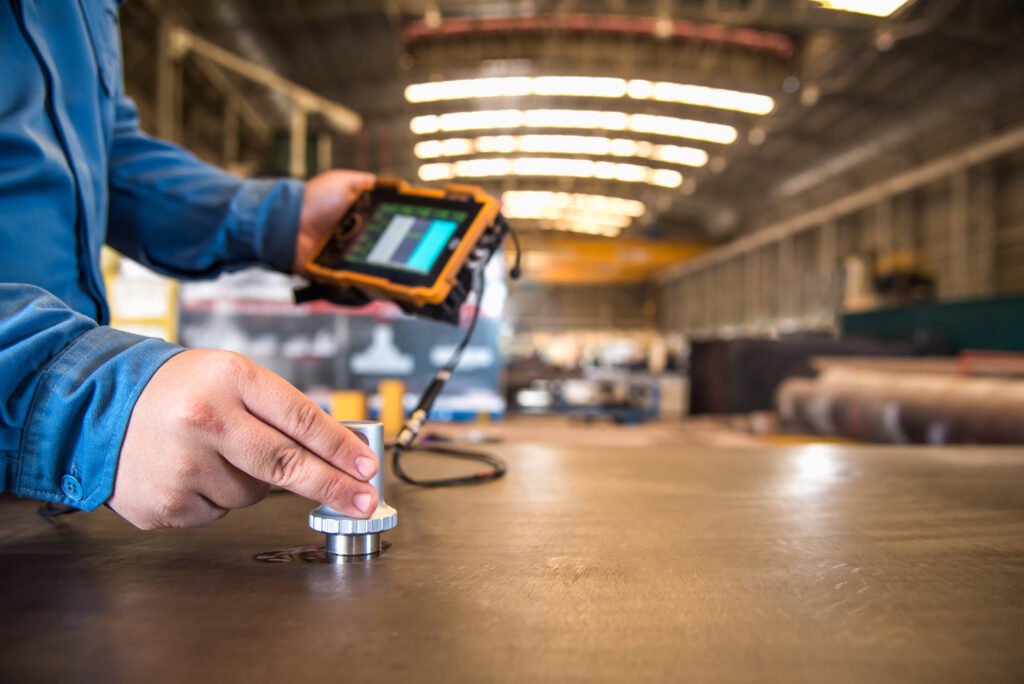
Every engineered product carries an implicit promise: it will perform safely and reliably under the conditions it was designed for. Whether it is a bridge supporting daily traffic or a small component inside a machine, failure is not an option. To keep that promise, engineers rely on mechanical testing to understand exactly how materials behave from the moment a load is applied to the point of failure.
Mechanical testing is more than a technical procedure. It is a window into the true nature of materials. It reveals how they respond to stress, how they deform, and ultimately how they break. These insights are essential for making informed design decisions and ensuring long-term performance.
In this article, we take a deep dive into mechanical testing, exploring the journey from initial loading to final failure. By understanding each stage of this process, engineers and curious readers alike can gain a clearer picture of how materials perform in real-world applications.
Understanding Load and Material Response
Mechanical testing begins with the application of load. This load can take many forms, including tension, compression, bending, or torsion. Each type of loading reveals different aspects of material behavior.
When a load is first applied, most materials respond elastically. This means they deform slightly but return to their original shape once the load is removed. This phase is crucial because it defines the material’s stiffness and its ability to withstand everyday forces without permanent damage.
As the load increases, the material may enter a plastic deformation phase. In this stage, changes in shape become permanent. Mechanical testing captures this transition, providing valuable information about yield strength and ductility.
Understanding how materials respond to load is the foundation of mechanical testing. It allows engineers to predict how components will behave under normal operating conditions and helps prevent unexpected failures.
The Stress-Strain Relationship
One of the most important insights gained from mechanical testing is the relationship between stress and strain. Stress represents the force applied to a material, while strain measures how much the material deforms.
This relationship is often visualized as a curve that tells a detailed story about material behavior. The initial linear portion represents elastic behavior, where deformation is reversible. Beyond this point, the curve begins to change, indicating the onset of plastic deformation.
Mechanical testing uses this curve to identify key properties such as yield strength, ultimate strength, and elongation. These properties are essential for material selection and design.
Although the stress-strain curve is a fundamental concept, its interpretation requires careful analysis. Small variations in the curve can reveal important details about material quality and performance.
From Elasticity to Plasticity
The transition from elastic to plastic behavior is one of the most critical stages in mechanical testing. It marks the point at which a material begins to experience permanent changes.
In practical terms, this transition defines the limits of safe operation. Engineers must ensure that materials operate within the elastic range whenever possible to avoid long-term damage.
Mechanical testing helps identify this boundary with precision. By understanding where elasticity ends and plasticity begins, engineers can design structures that remain reliable under expected loads.
This stage also provides insights into ductility, which describes how much a material can deform before breaking. Materials with high ductility can absorb more energy and are often preferred in applications where impact resistance is important.
Read Also: Autonomous Vehicles and Self-Driving Technology
The Path to Failure
Failure is not a single moment but a process that unfolds over time. Mechanical testing allows engineers to observe this process in detail, revealing how and why materials break.
As the load continues to increase, microscopic changes begin to occur within the material. Small cracks may form and gradually grow, weakening the structure. These changes are often invisible to the naked eye but can be detected through careful testing.
Eventually, the material reaches its ultimate strength, the maximum load it can تحمل before failure. Beyond this point, the material can no longer sustain the applied forces, leading to fracture.
Mechanical testing provides valuable insights into different types of failure, such as brittle fracture and ductile fracture. Understanding these failure modes helps engineers design safer and more resilient systems.
Time-Dependent Behavior in Mechanical Testing
Not all failures occur immediately after loading. Some materials degrade over time, even under constant or repeated stress. Mechanical testing includes methods to evaluate these time-dependent behaviors.
Fatigue testing examines how materials respond to repeated loading cycles. Even when the applied stress is below the material’s ultimate strength, repeated cycles can lead to failure. This type of mechanical testing is especially important for components that experience continuous use.
Creep testing, on the other hand, focuses on how materials deform under constant stress over long periods. This is particularly relevant in high-temperature environments where materials may slowly lose their shape and strength.
By incorporating time into mechanical testing, engineers gain a more complete understanding of material performance throughout its lifecycle.
Environmental Effects on Material Performance
Real-world conditions are rarely as controlled as laboratory environments. Temperature, humidity, and exposure to chemicals can all influence how materials behave.
Mechanical testing often includes environmental simulations to account for these factors. For example, a material may be tested at elevated temperatures to replicate operating conditions in an engine or industrial setting.
These tests reveal how environmental factors can accelerate degradation or alter mechanical properties. Understanding these effects is essential for ensuring that materials perform reliably in their intended environments.
Mechanical testing that considers environmental conditions provides a more realistic picture of material performance, reducing the risk of unexpected failures.
Advanced Techniques in Mechanical Testing
Modern mechanical testing has evolved to include advanced techniques that provide deeper insights into material behavior. Digital tools and high-precision instruments allow engineers to observe changes at both macro and micro levels.
Techniques such as real-time deformation analysis enable detailed tracking of how materials respond during testing. This helps identify localized weaknesses and improves the accuracy of results.
Simulation and modeling also play a growing role in mechanical testing. By combining experimental data with computational analysis, engineers can predict how materials will behave under complex conditions.
These advancements are transforming mechanical testing into a more comprehensive and efficient process, enabling better decision-making in engineering design.
Interpreting Mechanical Testing Data
Data from mechanical testing is only valuable when it is properly interpreted. Engineers must analyze results carefully to draw meaningful conclusions about material performance.
This involves comparing test results with design requirements and identifying any potential risks. For example, a material may meet strength requirements but fail to provide sufficient ductility for a specific application.
Mechanical testing data also helps in optimizing materials and processes. By understanding how different factors influence performance, engineers can make improvements that enhance reliability and efficiency.
Accurate interpretation requires both technical knowledge and practical experience. It is a critical step in ensuring that testing results translate into real-world success.
Frequently Asked Questions (FAQ)
What is mechanical testing?
Mechanical testing is the process of evaluating how materials respond to applied forces. It helps determine properties such as strength, flexibility, and durability.
Why is mechanical testing important?
Mechanical testing ensures that materials can perform safely under expected conditions. It provides the data needed for design, quality control, and failure prevention.
What does a stress-strain curve show?
A stress-strain curve shows how a material deforms under load. It reveals key properties such as elasticity, yield strength, and ultimate strength.
What is the difference between elastic and plastic deformation?
Elastic deformation is temporary and reversible, while plastic deformation is permanent. Mechanical testing helps identify the transition between these two states.
How does mechanical testing detect failure?
Mechanical testing detects failure by applying increasing loads until the material breaks or shows signs of fracture. It also identifies how and why the failure occurs.
What is fatigue in mechanical testing?
Fatigue refers to the weakening of a material due to repeated loading cycles. Mechanical testing evaluates how long a material can withstand such conditions before failing.
Can environmental conditions affect mechanical testing results?
Yes, factors like temperature and humidity can influence material behavior. Mechanical testing often includes environmental simulations to account for these effects.
Conclusion
Mechanical testing provides a detailed journey from the initial application of load to the final moment of failure. It reveals how materials respond, adapt, and eventually break under different conditions. These insights are essential for designing safe, reliable, and efficient systems.
By examining each stage of material behavior, from elastic deformation to ultimate failure, engineers gain a deeper understanding of performance. Modern advancements in testing techniques and data analysis further enhance this understanding, allowing for more accurate predictions and better decision-making.
Ultimately, mechanical testing is not just about measuring properties. It is about uncovering the true nature of materials and ensuring that they can meet the demands of real-world applications. This deeper insight is what enables innovation while maintaining the highest standards of safety and reliability.
